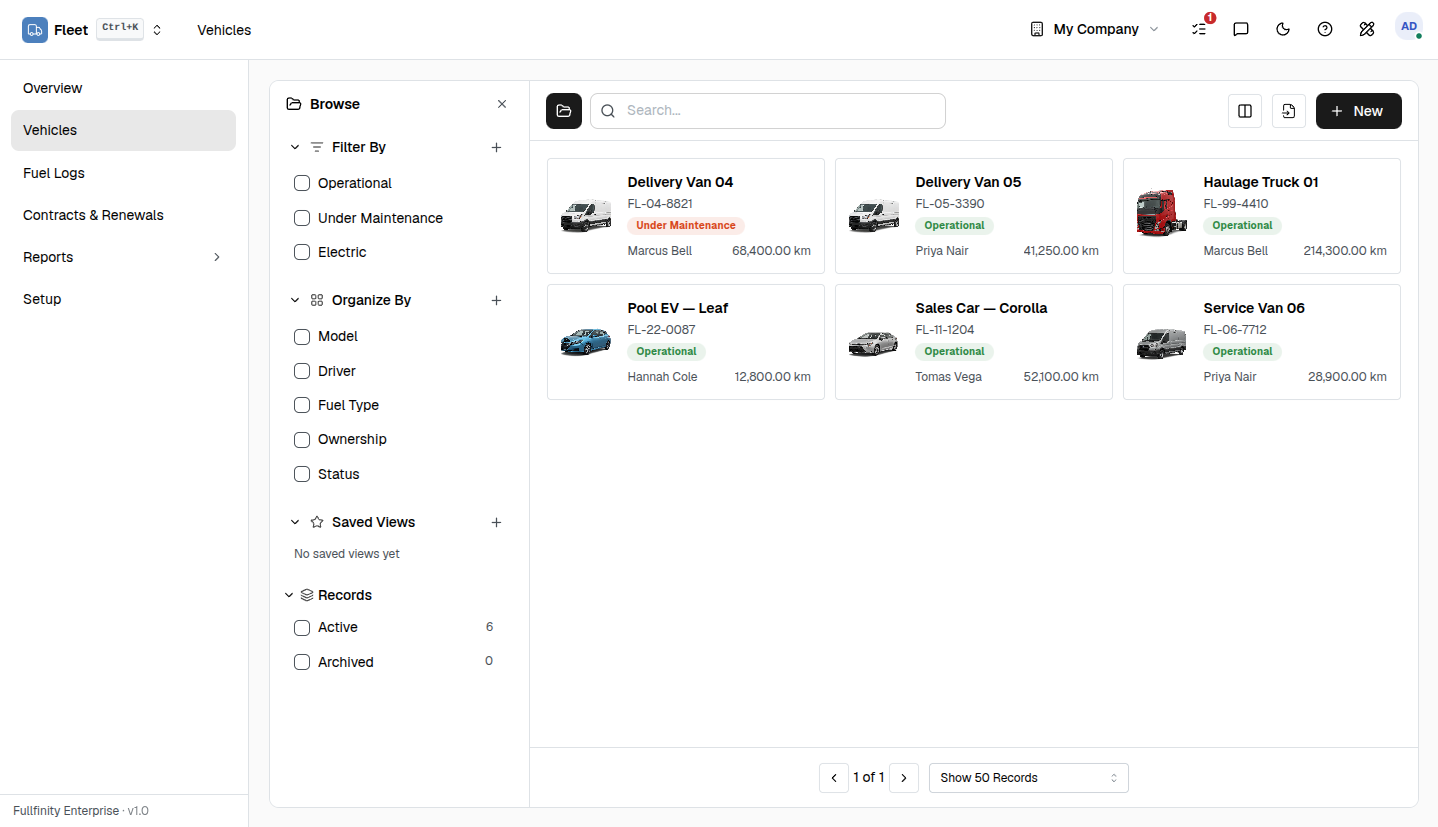
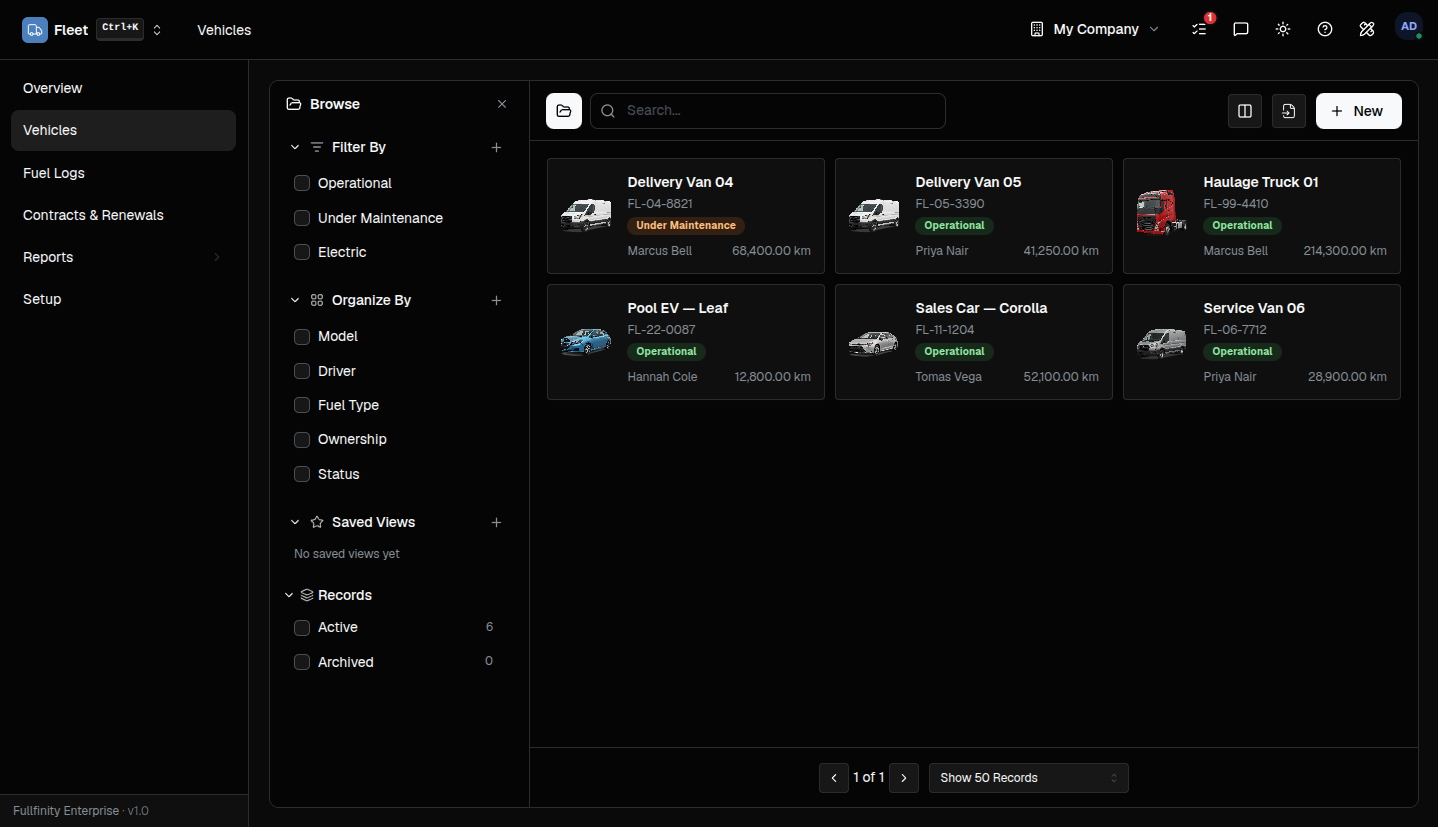
Every vehicle, one record — from first fill-up to next service.
Log a fill-up and the next service books itself, right down to the true cost per mile. No vehicle ends up off the road because a reminder never fired.
A van breaks down. The service was three spreadsheets away.
Fuel receipts in one place, the service log in another, insurance dates on a wall calendar. The odometer that should have flagged a service is a number nobody typed in twice — so the reminder never fires, and the first sign of trouble is a vehicle off the road.
Log a fill-up. The service books itself.
A vehicle is the same asset your Maintenance app services — so the moment you record a refuel, its odometer moves forward, and a preventive service that was due at that reading raises itself against the very same vehicle. One entry, and the workshop already knows.
The insurance renews before it lapses, not after.
Leases, insurance, registration, road tax, an inspection due — each has an expiry, and as one nears, Fleet puts a renewal on someone's list against that exact vehicle. You find out a fortnight early, not from a roadside fine.
What that van really costs to run — per mile.
Fuel spend over the distance it actually covered, plus the lease and insurance it's carrying, roll up on the vehicle itself. You can see which vehicle is quietly the expensive one before you buy the next.
One connected system
The same customers, products and stock run through Fleet and every other app — nothing kept in a separate tool.
Open-core
The core apps are open source, and the whole thing is yours to self-host.
Free, unlimited users
Self-host the Free edition with your whole team on it — no per-seat fees, no seat counting, no trial running out.
Only what you need
Run Fleet on its own, and switch on the rest of the suite when you're ready.
Fleet management software, answered.
How is this different from standalone fleet management software?+
A standalone tool tracks vehicles in isolation, then you re-key everything into your service log and your accounts. Here a vehicle is the same asset your Maintenance app already services, so a fuel entry keeps the odometer current, preventive service triggers itself, and there is nothing to sync.
Do I need the Maintenance app too?+
Fleet builds on Maintenance, so a vehicle carries its full service history, meter readings and preventive plans out of the box — a corrective repair or a scheduled service is raised against the very same vehicle you fuel and insure.
How does it stop a renewal from lapsing?+
Every lease, insurance policy, registration, road tax and inspection has an expiry date. As one comes due, Fleet raises a renewal to-do against the vehicle for whoever is responsible — so a policy never quietly runs out.
Can I self-host it?+
Yes — the Free edition runs on your own server, free, with your whole team on it. Prefer not to run servers? We host a managed cloud. Same product either way.
Apps that pair with Fleet
Run Fleet — and the rest of your business — in one place.
Join the waitlist and be first through the door when Fullfinity launches.
Join the waitlist