The open-core
Business OS.
Fullfinity is an open-core ERP that runs every part of your business — sales, inventory, HR, projects, accounting and more — in one modern system. Start free with a single app or run them all, host it anywhere, no lock-in.
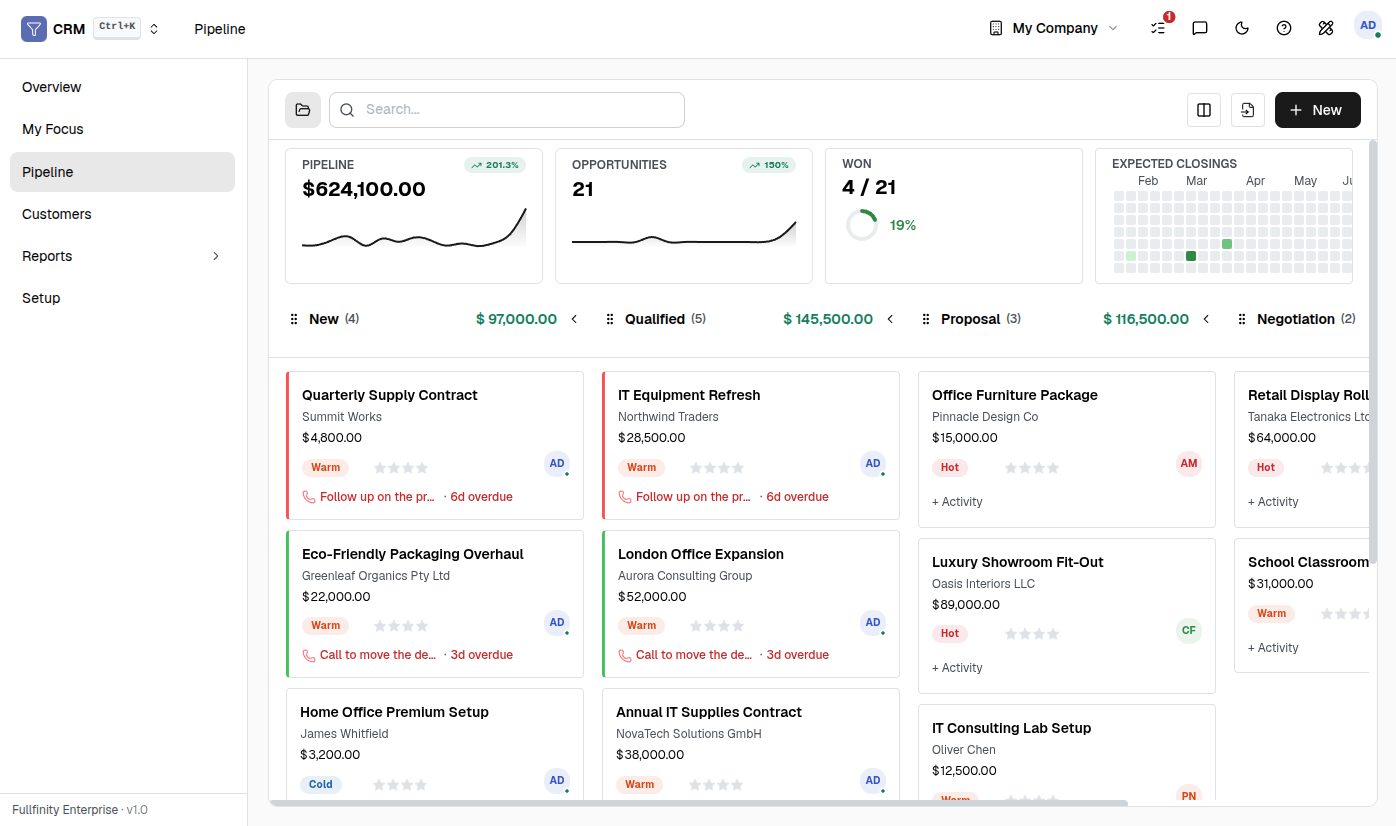
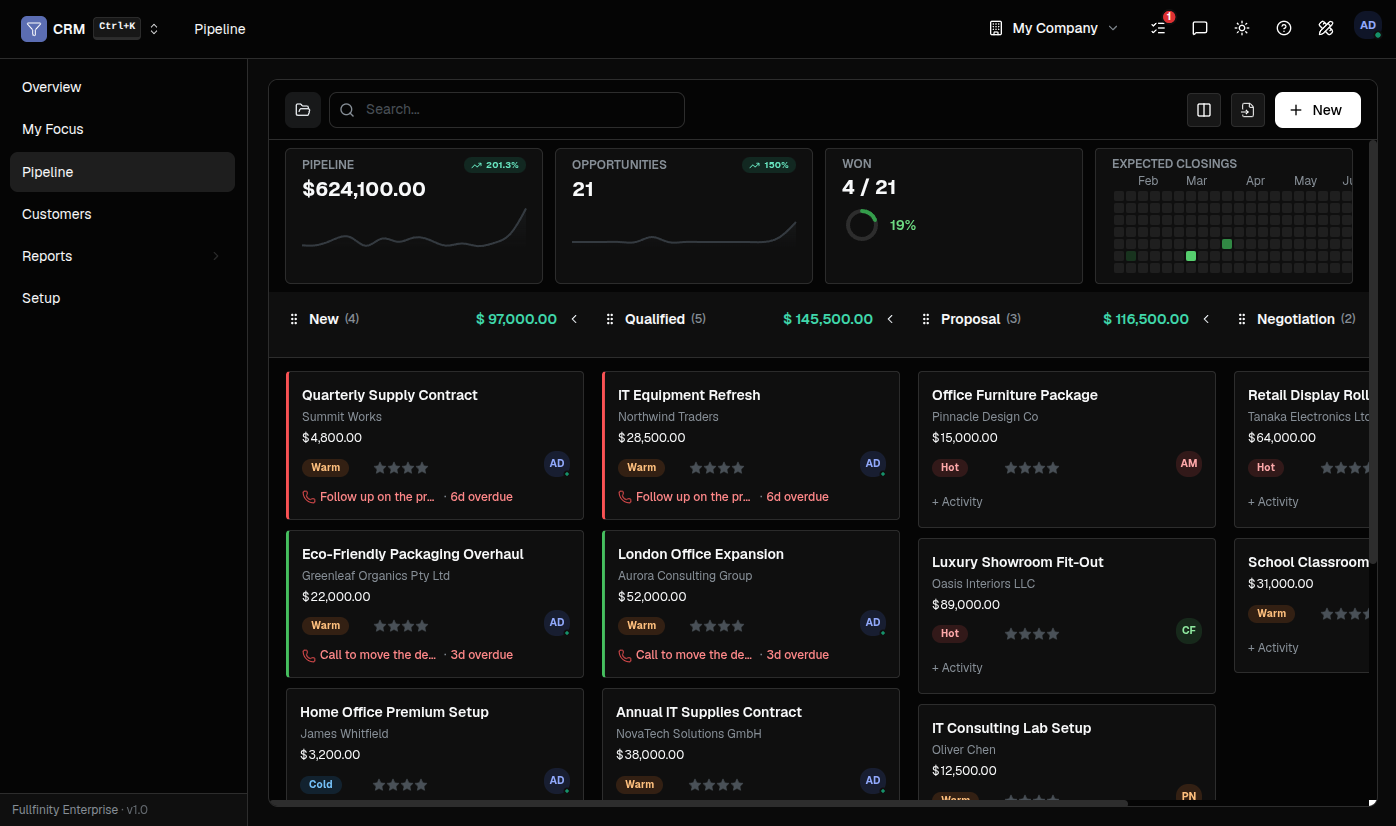
Everything your business runs on.
Whatever you came for — a project tracker, a help desk, a warehouse, a payroll run — it's one of more than forty apps in one open-core ERP, sharing a single database and design. Come for one; add the rest when you're ready.
Sell
Operate
Finance
People & Service
+ 13 country localizations · 7 payment gateways · an app store, coming soon
A different kind of business platform.
If you've run business software before, you know the frustrations. We built Fullfinity to end them.
One system. Not fifteen disconnected tools.
Whatever moves — a new hire, a support ticket, a production run, a sale — the right apps respond on their own. Here, onboarding a new employee spins up their project, schedules their first payslip, and requests their equipment. No connectors, no overnight syncs, no reconciling spreadsheets.
Only the apps you need — nothing you don't.
A design studio might run just Projects and Invoicing. A factory adds Inventory and Manufacturing. A growing brand turns on CRM, eCommerce and Helpdesk. Switch apps on in seconds as your needs change — the ones you skip simply aren't there to slow you down.
Quick today. Quick at scale.
Your team should never wait on the software. Built on a modern async core, screens respond instantly and dashboards refresh themselves — and it holds that speed as your data and your team grow, on any device, in light or dark.
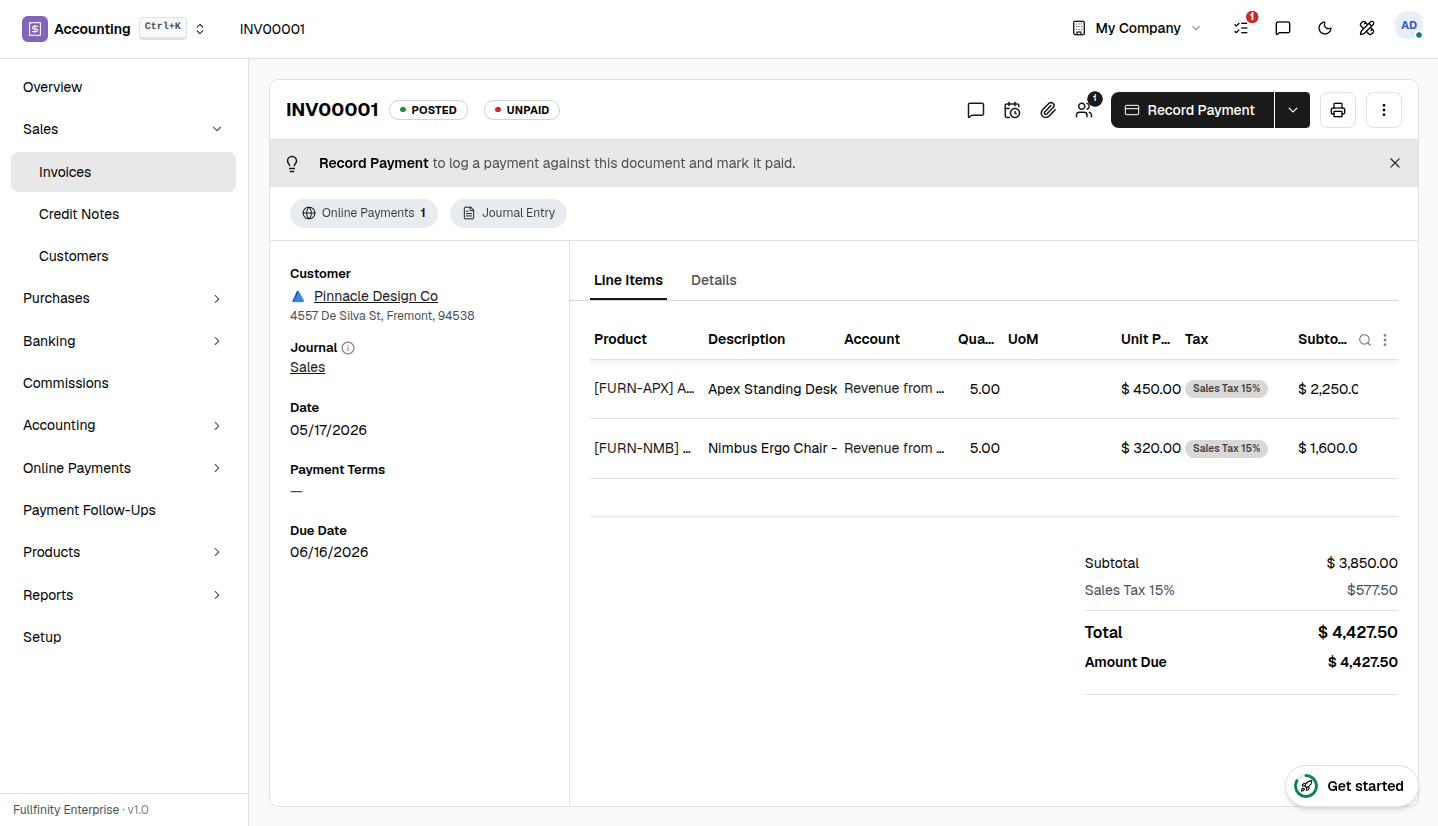
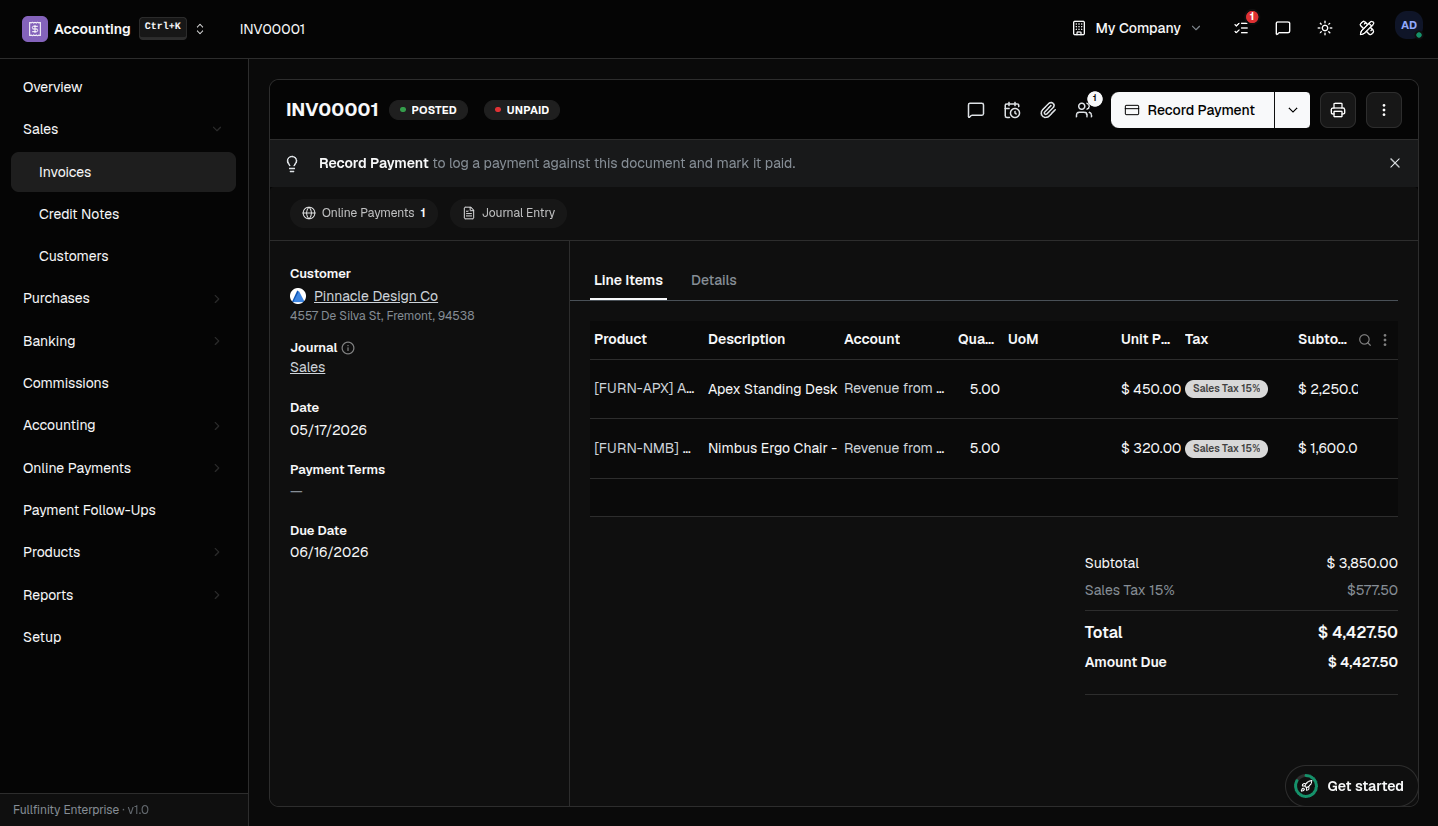
Enterprise-grade where it counts.
The foundation every app is built on — the things you only notice when they're missing.
Multi-company
Run several legal entities in one system, with their books and data kept cleanly apart.
Multi-currency
Buy, sell and report in any currency, with exchange rates that stay up to date.
Roles & permissions
Fine-grained access rules, so everyone sees exactly what they should — and nothing else.
Full audit trail
Every change on every record is logged — who did what, and when — with nothing to switch on.
Real-time
Live updates and collaborative editing across your team — no refresh button in sight.
Integrations
Connect the payment, calendar and other tools you already use — with a clean API for everything else.
Free upgrades
New versions carry your data forward automatically — no migration project, no fee.
Reporting & dashboards
Live dashboards, pivots and charts on any data — reporting your whole team can act on.
Ready for business anywhere.
Localized tax rules and statutory payroll for twelve countries, native multi-currency, and an interface that translates into your team's language. Open another market and the rules are already there.
Yours to host. Free to upgrade. No lock-in.
The core apps are open source, and you can self-host the whole platform for free. Run it yourself, let us host it for you, or license the enterprise apps as you grow. New versions are always included — never a paid migration.
- All core business apps
- Unlimited users
- Free version upgrades
- Everything in Free
- Managed hosting & backups
- Support included
- Advanced accounting & MRP
- Quality, SLA & automation
- Priority support
Your data. Your servers. Your rules.
Self-host the whole platform, own your database, and extend the open-source apps you build on. Export everything whenever you like, and never worry about being locked in — or locked out.
Made to fit how your business works.
No two companies run the same way. Your team or a partner can shape any app — add the fields, screens and rules you need — cleanly, and your changes keep working through every upgrade. No rebuilds, no lock-in.
Explore the developer platform →Questions, answered.
What if we outgrow the app we start with?+
Add more apps whenever you need them. Because every app shares one database, there is nothing to integrate and nothing to migrate — the new app simply already knows your customers, products and people.
What happens to our data if we stop paying?+
It stays yours. The Free edition is yours to self-host, so you can keep running it indefinitely — your business is never held hostage to a subscription.
Can we host it ourselves?+
Yes. The Free edition is free to self-host, forever, with unlimited users. Or let us run the managed cloud for you — same platform, no infrastructure to maintain.
Do you charge per user?+
Free includes unlimited users. Standard (managed) is $25 per user / month and Enterprise (self-hosted, with custom modules) is $40 — both with up to 12% off when billed annually.
How hard is it to switch from our current system?+
Bring your data across through our open API, or with help from our partners on a full migration — you don't have to rebuild from scratch.
Is it customizable for our business?+
Deeply. Every app is extensible in Python and readable YAML, and there is a built-in app store — so your team or a partner can tailor it without forking or losing upgrades.
The Business OS your company deserves is almost here.
Join the waitlist and be first through the door when Fullfinity launches.
We'll email you once, when we launch.